In this post, I share the medical examinations I went through before receiving my multiple sclerosis (MS) diagnosis.
The first step: my general practitioner
Once I decided to seek medical help, my first stop was my general practitioner.
In Hungary, most specialist care requires a referral, so the diagnostic process usually begins with a GP. You describe your symptoms, and the doctor refers you to the appropriate specialist.
When I visited my doctor, I had a very hard time explaining exactly what was wrong. Neither the doctor nor the assistant fully understood what might be causing my symptoms. When they learned that my symptoms had been present for more than a year, I received a serious “wake-up call,” which was completely justified. I tend to downplay problems and often postpone important things.
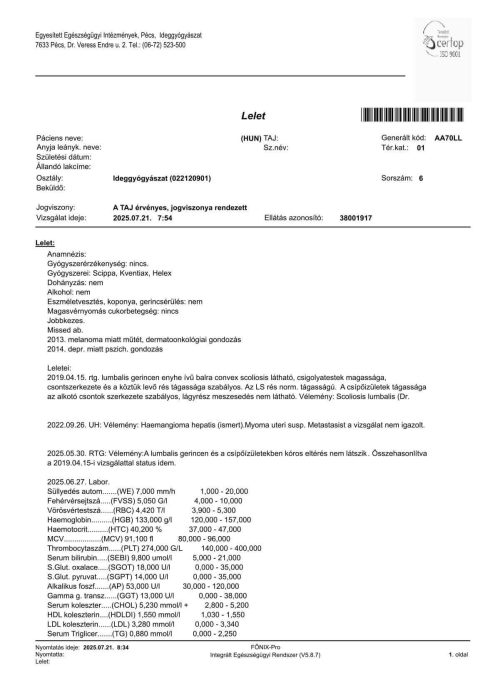
In my medical record, the following description was written:
“For one year, the patient has experienced difficulty lifting the left foot while walking, frequent tripping, inability to run, and occasional limping. In addition, episodes of balance loss and instability occur, for example when turning corners.”
It is interesting to read these notes now. Over time, memories fade—and sometimes even change.
Recording my symptoms
Because it was difficult to describe my mobility issues in words, I asked my husband to record videos of me walking and running. Honestly, it looked quite unusual.
Tip: If you struggle to explain your symptoms to a doctor, recording a short video can be extremely helpful. In my case, it made a significant difference during the diagnostic process.
My GP referred me for a hip X-ray and a neurological consultation.
The X-ray showed no abnormalities.
Neurology and spinal MRI
The neurologist performed the necessary examinations and reviewed the videos as well, but I felt that even he was unsure about the cause of my symptoms. However, he ordered a spinal MRI and also recommended a rheumatology evaluation, as my symptoms could have been related to a musculoskeletal condition.
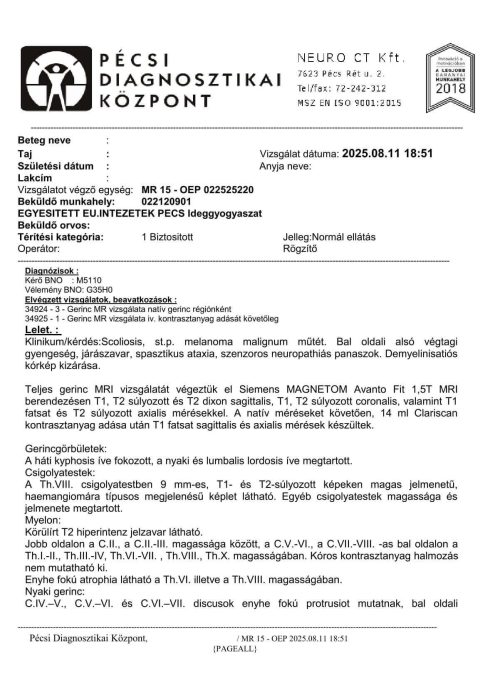
The spinal MRI took about 45 minutes.
When I told my mother about it, she immediately said:
– “They found something.”
I tried to stay optimistic:
– What if it just took so long because they didn’t find anything?
Of course, she turned out to be right.
When the results arrived
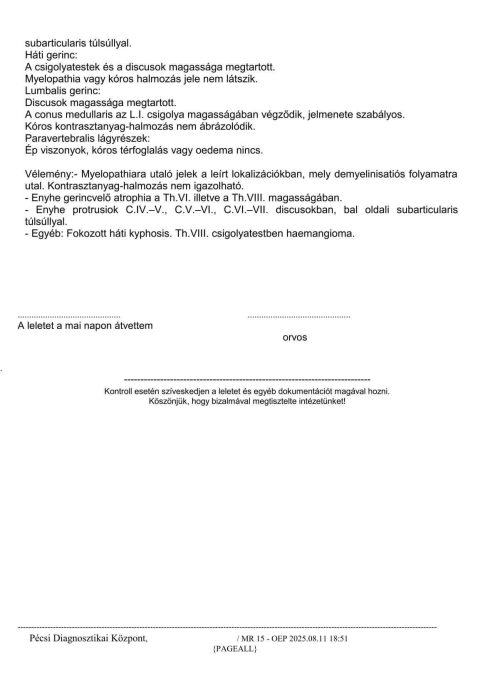
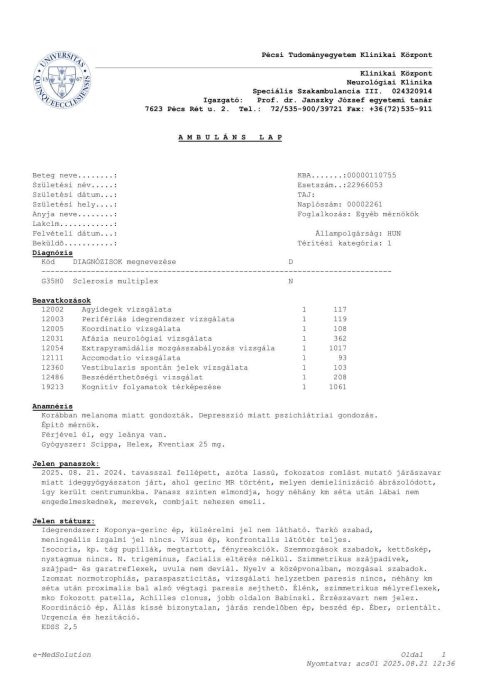
A few days later, the MRI results came back, and they strongly suggested multiple sclerosis (MS).
After that, I was referred to an MS specialty clinic, where further tests confirmed the diagnosis.
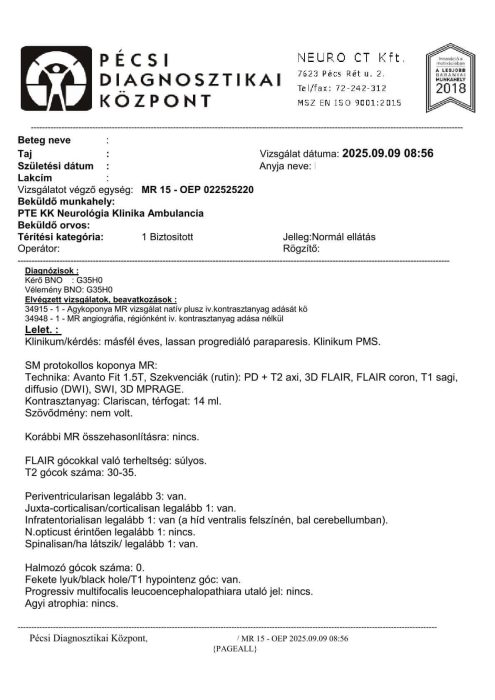
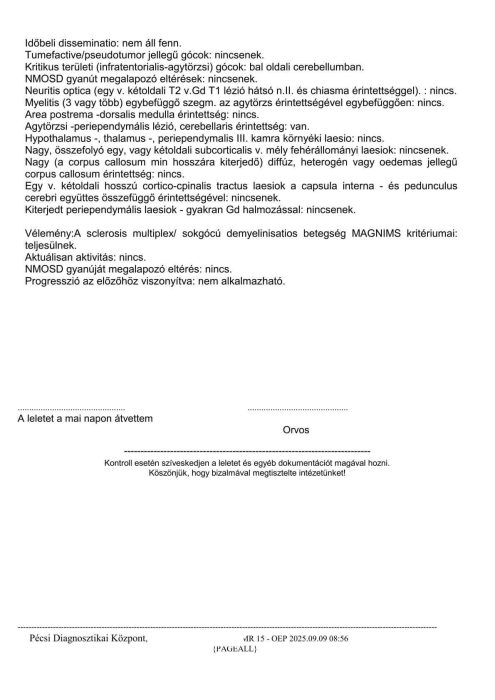
My MS specialist ordered a brain MRI and several blood tests. A lumbar puncture was not necessary, as the available results were sufficient for a clear diagnosis.
The diagnosis
Final diagnosis:
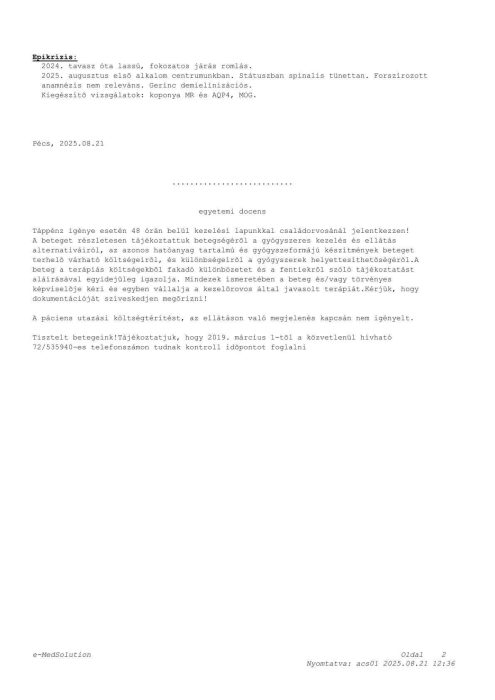
PPMS (Primary Progressive Multiple Sclerosis)
EDSS: 2.5
(The EDSS is a scale used to measure the level of disability caused by MS.)
Looking back
Which examinations led to my MS diagnosis?
- General practitioner consultation
- Hip X-ray
- Neurological examination
- Spinal MRI
- Brain MRI
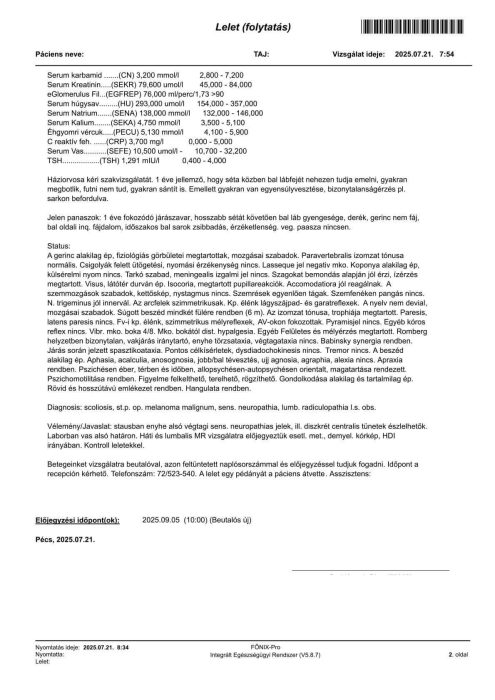
- Blood tests
- MS specialty clinic
I first visited my GP in May 2025, and I received my diagnosis in August. By Hungarian standards, this was a relatively fast process, as specialist appointments and MRI scans often involve long waiting times.
Everything ultimately went smoothly, and the diagnostic process progressed more easily than I expected.
Next chapter
What comes next?
In my next post, I will write about my first Ocrevus treatment.
If you want to know more about me
If you are curious about the symptoms that led me to seek medical help, read my post “Early Signs.”
If you would like to learn more about me, visit the “About Me” page.
Medical documents from my diagnosis
At the end of this post, I also share some of my medical documents—with sensitive information removed—to show what kind of paperwork an MS patient receives during the diagnostic process in Hungary.